Design
Nail Art & Design
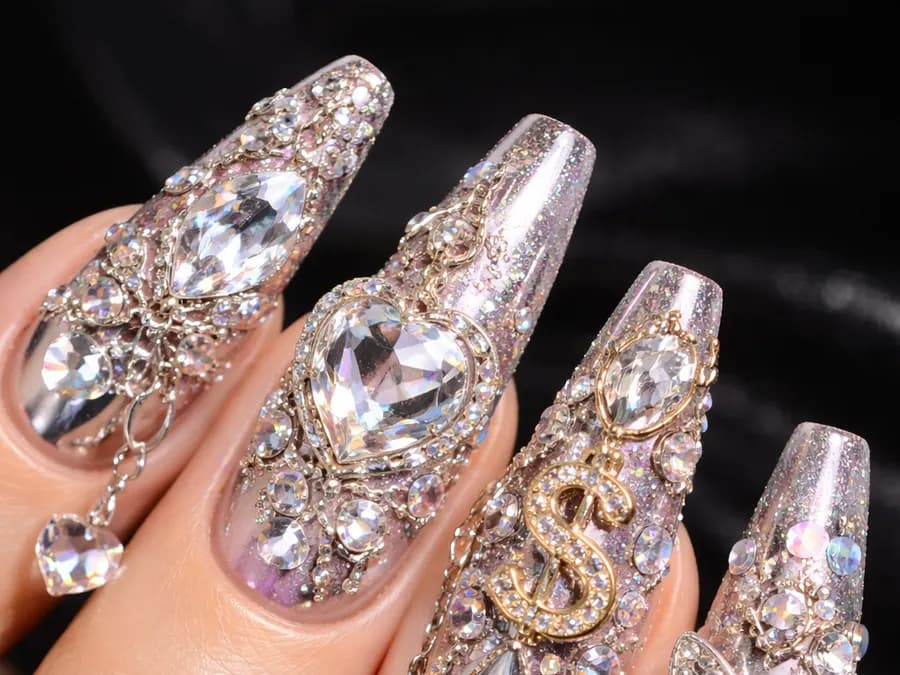
Hand-painted nail designs, 3-D design nails built up on the surface, chrome and cat-eye finishes, and custom designed nails at whatever length you ask for. Priced as an add-on to a set or a manicure rather than booked on its own.
From $5· 3 options
Options & pricing
Design
$5
3-D Design
$10
Custom Length
$25
Prices are starting prices. Length, shape and design work may add to the total; your technician confirms before starting.
Good to know
- Is nail art booked separately or added to an appointment?
- Added. These prices are the surcharge on top of a manicure or a full set, not the price of the appointment. Say what you want when you call so the extra time is allowed for — nail painting on ten nails is not a five-minute job and a rushed design is a bad design.
- What is the difference between a design and a 3-D design?
- A design is painted flat onto the nail. A 3-D design is built up off the surface with acrylic or gel — a raised flower, a bow, a gem setting — so it has actual relief you can feel. It costs more, takes longer, and catches on things, which is worth knowing before you commit ten nails to it.
- What are chrome and cat eye?
- Chrome is a fine powder buffed over cured gel to give a mirror finish. Cat eye uses a magnetic gel pulled into a shifting band of light with a magnet while it cures. Both are finishes rather than paintings, so they cover the whole nail and read as a single effect rather than a motif.
- Can I bring a photo of what I want?
- Please do. Matching a picture is far easier than matching a description, and it also lets your technician tell you honestly before starting whether it will work at your nail length. Custom designed nails at a custom length is its own line on the price list for exactly this reason.
- How long does nail art last?
- As long as what it is painted on. On a gel manicure that is two to three weeks; on an acrylic or dip set it lasts to the refill. Painted designs sit under a top coat, so they wear at the same rate as the finish rather than rubbing off separately. 3-D work is the exception — raised pieces are the first thing to catch and go.